
The Properties Are Different. The Standard Shouldn’t Be.
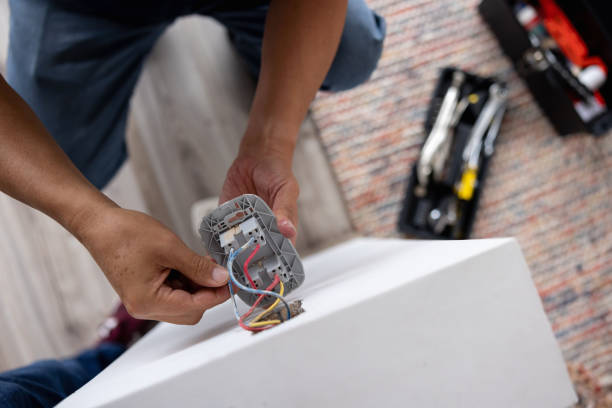
Residential electrical repair and commercial electrical repair involve different equipment, different code requirements, and different scales of complexity. But the professional standard that should apply to both is the same: proper diagnosis, honest communication, quality parts, correct installation, and accountability for the finished work. Whether you are a homeowner dealing with a dead circuit in your kitchen or a facility manager troubleshooting a panel fault in a commercial building, what you need from your electrical repair service is fundamentally identical.
What changes between residential and commercial contexts is the technical knowledge required. Commercial properties involve three-phase power systems, motor controls, commercial lighting circuits with ballasts and drivers, and specialty equipment that residential electricians may never encounter. The repair service you hire should have demonstrable experience with the type of property you are managing — not someone who does mostly residential work and is learning on your commercial property.
Diagnosing Electrical Problems Across Property Types
A skilled electric repair service technician approaches diagnosis the same way across property types: systematically and without assumptions. The tendency to assume the problem is the most obvious thing — the thing that stopped working most visibly — leads to a lot of callbacks where the original issue was addressed but the underlying cause was not. Outlets fail for many reasons. Circuits trip for many reasons. Finding the actual reason requires testing, not guessing.
In residential properties, the diagnostic process typically covers the device that failed, the circuit serving it, the panel breaker protecting that circuit, and the wiring between them. In commercial properties, the diagnostic scope may extend to distribution panels, subpanels, motor control centers, and building management system integrations. The tools are similar — multimeters, clamp meters, thermal cameras — but the systems being tested are more complex and require more contextual knowledge to interpret correctly.
Residential Electric Repairs That Come Up Most Often
The repairs residential electricians perform most frequently fall into predictable categories. Outlet failures — whether from a tripped GFCI upstream, a loose connection at the device, or a failed outlet — are the most common service call by volume. Breaker issues run a close second — breakers that trip too easily, breakers that will not reset after a trip, and breakers that feel warm to the touch. Lighting circuit problems — fixtures that flicker, switches that stopped working, dimmers that make noise — are a steady third.
Less common but more significant are the repairs that involve wiring itself — loose connections at junction boxes that cause intermittent faults, deteriorated insulation on older wiring that creates shock or fire hazards, and the aftermath of pest or moisture damage to wiring in attic or crawl space runs. These repairs require more time and often involve opening walls or ceiling areas to access the affected wiring. They are not optional when identified.
Commercial Repairs and the Cost of Downtime
Commercial electrical repairs carry a financial urgency that residential repairs typically do not. When a circuit supplying critical equipment in a manufacturing facility goes down, or a panel fault takes out power to a restaurant kitchen during dinner service, the meter on lost revenue is running from the moment the failure occurs. Commercial repair services that understand this dynamic prioritize response speed and diagnostic efficiency in ways that directly protect the business owner’s bottom line.
Good commercial electric repair services maintain stock of the common replacement parts for commercial electrical systems — commercial-rated breakers, motor contactors, lighting ballasts and drivers, wire and connectors in the gauges used in commercial distribution. Not having to make a supply run in the middle of a repair can be the difference between a two-hour fix and a half-day outage. That kind of preparedness is not accidental — it reflects experience and organizational discipline.
How to Evaluate a Repair Service Before Committing
Price matters in repair services, but it is a poor primary selection criterion. The cheapest repair service available is rarely the one that provides the best value — particularly when the repair involves electrical systems where an inadequate fix creates ongoing problems and potential safety hazards. Evaluating repair services on the basis of licensing, insurance, diagnostics process, and track record gives you information that is far more predictive of a good outcome than the bid price alone.
Ask specifically how they charge — some services use flat rates for common repairs, others charge time and materials with a trip fee. Neither is inherently wrong, but you should understand what you are agreeing to before a technician arrives. Ask what happens if the initial diagnosis was incorrect and more work is needed than originally quoted. A transparent answer to that question tells you something important about how the service handles the gap between estimates and reality.
After the Repair: What Follow-Through Looks Like
A repair service that disappears the moment the invoice is paid is not demonstrating the confidence in their own work that a quality contractor should have. Professional electric repair services stand behind their work with explicit warranties — typically one year on parts and labor for most repair work. If the same issue resurfaces within the warranty period, they come back and address it without charging again.
Beyond the formal warranty, a good repair service follows up on significant repairs to confirm that the fix is holding and the system is operating normally. This is not just good customer service — it is good engineering. Complex electrical problems sometimes have multiple contributing factors, and confirming that the repair addressed all of them requires a follow-up assessment after the system has been running under normal load for a period of time.