
Across Thailand and Southeast Asia, the demand for high-performance synthetic turf solutions has grown steadily over the past decade. Schools, sports complexes, and real estate developers are increasingly turning to artificial grass not just for football pitches, but for a wide range of landscaping and recreational applications. Understanding the distinctions between project types, material grades, and construction processes can save institutions significant time and capital investment.
Why Synthetic Turf Has Become a Strategic Asset
Natural grass fields require consistent irrigation, fertilization, mowing, and pest control — a maintenance burden that many institutions find unsustainable in tropical climates. Synthetic turf, by contrast, offers predictable performance across wet and dry seasons, making it a rational long-term investment for organizations that host regular sporting events or need year-round outdoor usability.
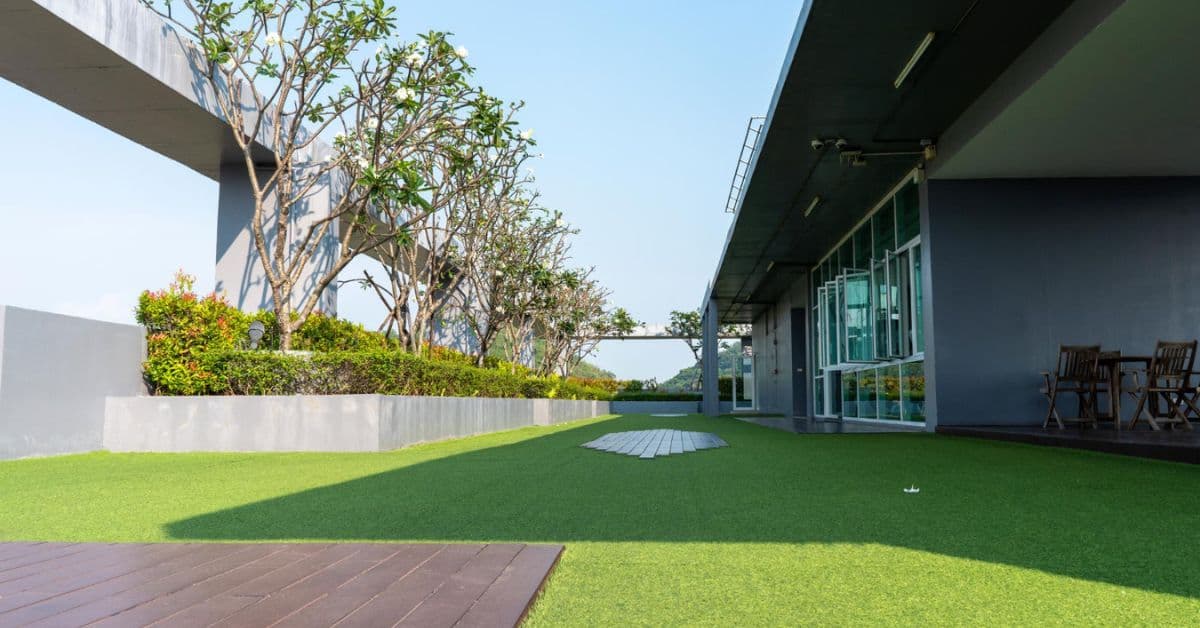
For real estate developers and landscape designers, artificial grass also opens up design possibilities on rooftops, podium levels, and sloped terrain where natural turf would struggle to establish. The material has matured significantly — modern fibers replicate the look and feel of natural grass while meeting safety and performance standards set by international sporting bodies.
จัดสวนหญ้าเทียม: Landscaping Applications Beyond the Sports Field
While football pitches often dominate discussions about artificial turf, the landscaping segment is equally important. จัดสวนหญ้าเทียม — the installation of synthetic grass in garden and decorative settings — is a growing service category that serves residential condominiums, hotel grounds, commercial plazas, and school campuses.
Key considerations for landscaping projects include:
- Pile height and density — shorter, denser fibers are preferred for decorative gardens, while taller fibers suit play areas
- UV stabilization — essential in tropical environments where prolonged sun exposure can degrade lower-quality products
- Drainage layers — proper sub-base construction prevents waterlogging and extends product lifespan
- Infill material — silica sand or crumb rubber affects softness, stability, and maintenance requirements
Landscape architects working on mixed-use developments often specify synthetic turf on amenity decks precisely because it eliminates the need for irrigation infrastructure at elevated levels.
การสร้างสนามฟุตบอลหญ้าเทียม: Technical Standards and Planning
Football pitch construction is one of the most technically demanding applications of synthetic turf. การสร้างสนามฟุตบอลหญ้าเทียม involves multiple phases — site assessment, sub-base grading, shock pad installation, turf laying, infill compaction, and line marking — each of which affects the field’s playability and compliance with governing body standards.
FIFA and AFC specifications categorize synthetic turf products for football use. Fields intended for organized competition must undergo laboratory testing for ball roll, shock absorption, and surface temperature. Schools and sports complex operators who plan to host official matches should confirm that their chosen turf product holds the appropriate quality certification before procurement.
Common planning mistakes include:
- Underestimating sub-base requirements, leading to drainage failures during heavy rain
- Selecting a turf product based on price alone without verifying FIFA star rating compatibility
- Neglecting to account for perimeter curbing and fencing in the total project budget
- Skipping a proper site survey, which can result in uneven surfaces that affect ball movement
รับเหมาสร้างสนามฟุตบอล: Choosing the Right Contractor
Project outcomes in synthetic turf construction are heavily dependent on contractor selection. รับเหมาสร้างสนามฟุตบอล — contracting for football field construction — requires evaluating vendors not just on price, but on experience, material sourcing, installation methodology, and post-installation support.
A reputable contractor should be able to provide:
- A portfolio of completed projects with verifiable references
- Specification sheets and certification documentation for the turf products supplied
- A detailed breakdown of sub-base construction methods
- Warranty terms covering both the turf surface and the installation workmanship
- A maintenance schedule and guidance on annual grooming and infill top-ups
Institutions and developers who rush the vendor selection process often encounter cost overruns or surface failures within the first two to three years of use. Independent technical review of contractor proposals — particularly the sub-base specification — is a worthwhile investment for projects above a certain scale.
Maintenance Expectations After Installation
A common misconception is that synthetic turf is entirely maintenance-free. While it eliminates mowing and irrigation, proper upkeep is still necessary to preserve performance and appearance. High-use football pitches typically require:
- Regular brushing to keep fibers upright and distribute infill evenly
- Periodic inspection for seam separation or fiber wear in high-traffic zones
- Removal of organic debris, which can promote bacterial growth
- Infill top-up every two to three years depending on usage intensity
For decorative landscaping installations, maintenance requirements are lower, but periodic cleaning and inspection of drainage performance remain important.
Selecting Products for the Thai Climate
Thailand’s climate — characterized by intense UV radiation, high humidity, and seasonal heavy rainfall — places specific demands on synthetic turf products. Fibers should be manufactured with UV inhibitors built into the polymer structure rather than applied as a surface coating. Backing materials should be tested for moisture resistance, and drainage rates should exceed typical rainfall intensity for the installation region.
Specialists such as Teamturfs, operating in the Thai market, have developed installation protocols suited to local conditions, including sub-base designs that account for the high-rainfall seasons common in the Central Plains and Eastern Seaboard.
Conclusion
Whether the goal is a FIFA-compliant football pitch for a school athletic program, a decorative garden for a mixed-use development, or a recreational surface for a community sports complex, synthetic turf projects reward careful planning. Material selection, sub-base engineering, contractor vetting, and maintenance planning are all variables that determine long-term value. Institutions and developers who treat turf installation as a strategic infrastructure decision — rather than a commodity purchase — consistently report better outcomes over the field’s lifecycle.
For detailed service information, technical specifications, and project consultation in Thailand, visit: https://www.teamturfs.com/
Contact Us
Address: 99/96 Moo 18, Khlong Nueng Subdistrict, Khlong Luang District, Pathum Thani 12120, Thailand.
Phone: +6689 689 8288
Email: seneenama@gmail.com
Website: https://www.teamturfs.com/