
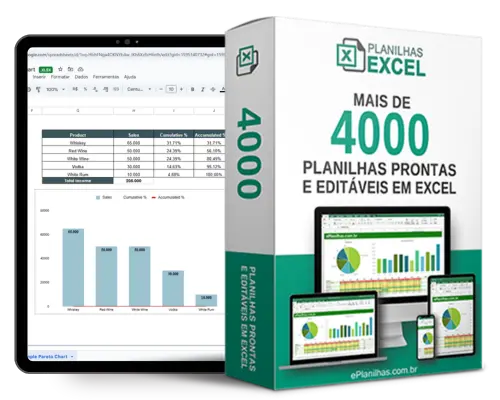
Excel remains one of the most widely used tools for organizing information, performing calculations, creating reports, and supporting everyday business decisions. From small companies to independent professionals, spreadsheets can be adapted to financial management, engineering, inventory control, taxation, property management, sales, and many other activities.
However, creating a complete spreadsheet from scratch can require considerable time. Users may need to develop formulas, organize worksheets, create validation rules, format reports, build dashboards, and test calculations before the file is ready for practical use.
For this reason, professionally prepared ready-made Excel templates can provide a useful starting point for professionals who want to save time while maintaining the flexibility of Excel.
Why Start With a Ready-Made Spreadsheet?
A template provides an existing structure that can be adapted to a particular activity. Instead of starting with an empty workbook, users can work with organized fields, formulas, tables, and reports that are already prepared for a specific purpose.
This approach can be particularly useful for small businesses and professionals who perform several administrative tasks themselves. Time spent creating spreadsheet structures is time that cannot be dedicated to customers, projects, sales, or strategic activities.
Another advantage is standardization. When information is entered using the same structure every month or for every project, comparing results becomes much easier. Historical records can reveal trends, changes in costs, variations in revenue, or other important patterns.
Spreadsheets for Different Professional Activities
The flexibility of Excel allows templates to be created for highly specialized applications as well as everyday management tasks.
In construction, for example, professionals frequently need to organize measurements, classifications, technical information, and calculations associated with specific standards. A specialized NBR 12721 calculation spreadsheet can provide an organized structure for working with project information and repetitive calculations.
Financial and tax planning presents another common challenge. Companies often need to compare revenue, expenses, margins, and taxation scenarios before making important decisions.
A structured tax planning spreadsheet can help organize these variables and provide a clearer basis for comparing different scenarios before discussing specific decisions with qualified accounting or tax professionals.
Templates Can Reduce Repetitive Work
One of the greatest benefits of spreadsheets is automation. Formulas can calculate totals, percentages, balances, averages, projections, and other indicators automatically whenever new information is entered.
For activities that are repeated regularly, this can represent a significant reduction in manual work. Instead of performing the same calculations every month, users can enter updated information into an existing structure and review the new results.
Templates can also include charts, dashboards, summary tables, and visual indicators. These elements can transform large amounts of raw data into information that is easier to interpret.
Flexibility Without Starting From Zero
Using a ready-made template does not mean that every user must follow exactly the same process. Excel files can generally be adapted according to specific requirements.
Categories can be changed, additional information can be included, reports can be expanded, and formulas can be adjusted when appropriate. This provides a balance between having an existing structure and maintaining the flexibility to customize the workbook.
It is also important to remember that spreadsheets are support tools. Technical, financial, accounting, tax, or regulatory decisions should always consider current requirements and appropriate professional expertise.
The quality of the results also depends on the quality of the information entered. Users should verify data, review formulas when necessary, maintain backups, and keep important files properly organized.
A Practical Tool for Everyday Work
Despite the growing number of specialized software platforms available today, spreadsheets continue to be valuable because they are accessible, customizable, and capable of supporting a wide range of activities.
A well-designed template can reduce setup time, improve consistency, simplify repetitive calculations, and help professionals focus more attention on interpreting information and making decisions.
Whether the objective is financial planning, technical calculations, business administration, project management, or another professional activity, ready-made Excel templates can provide a practical foundation without requiring users to build every tool from the beginning.